
Your Cart is Empty
Free lip balm + free shipping on orders over $39.99


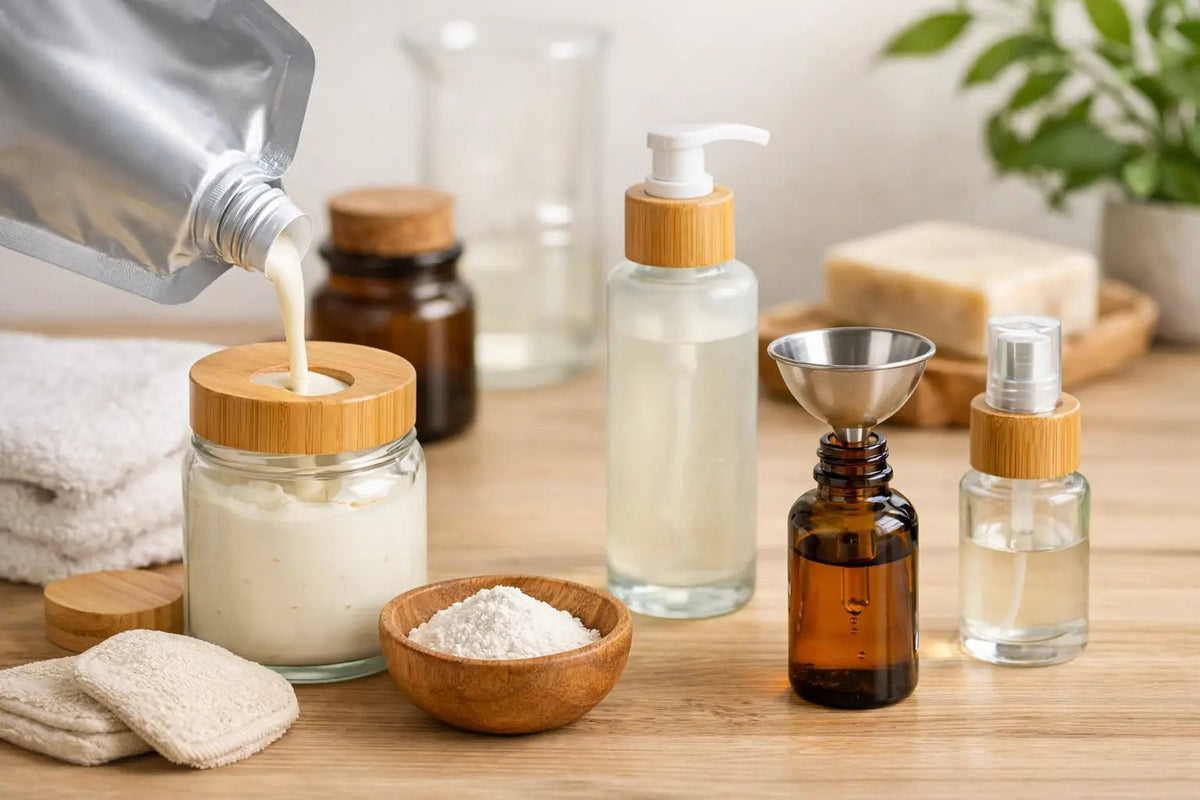
A hand soap bottle at the kitchen sink can disappear faster than most of us expect. Add shampoo, conditioner, body wash, lotion, and lip care to the mix, and everyday personal care can create a steady stream of empty containers. Low waste beauty refill options offer a practical way to keep the products you use while buying less new packaging along the way.
The goal is not a perfectly empty bathroom cabinet or a complicated zero-waste routine. It is choosing a few repeat-use products that make sense to refill, using what you already have, and avoiding purchases that create more clutter than care.
A refill is most useful when it replaces a package you would otherwise buy again and again. For many households, that means the staples used at the sink and in the shower - foaming hand soap, liquid hand soap, body wash, shampoo, conditioner, and castile soap. These are products that run out regularly, so a larger refill size can reduce the number of pumps, bottles, or jars brought home over time.
Refills work best when the original container is sturdy enough to use repeatedly. A good pump bottle, for example, can stay at the bathroom counter or kitchen sink while a larger refill container is stored under the sink. You get the convenience of the dispenser without replacing the smaller bottle every time it empties.
There is a trade-off, though. A large refill is only lower waste if you will use it before the product changes in scent, texture, or freshness. Choose a size that fits your household's pace. A busy family may finish a large hand soap refill quickly, while a single person may be better served by a more modest size or a bar soap that stores well.
Start with the products you reach for without thinking. These are the easiest places to make a lasting change because they do not ask you to learn a new routine.
Frequent handwashing makes hand soap one of the clearest candidates for refilling. Keep the original pump bottle, then replenish it from a larger refill format. Before refilling, rinse the bottle and pump thoroughly with warm water. Let both dry fully when possible, especially if the bottle has been sitting empty for a while.
Foaming hand soap needs a foaming pump to produce its light lather. Reusing the matching pump is usually simpler than trying to fit a standard pump onto a new bottle. If the pump begins to stick or no longer works well after many uses, it may be time to replace that one piece rather than the entire system.
Shower products are another sensible place to use refill sizes, particularly for families sharing a bathroom. Refill the bottle you know fits your shower shelf and is easy to handle with wet hands. A smaller bottle is often safer and more convenient in the shower than keeping a large container within reach.
For hair care, think about how much product your hair actually needs. Thick, long, curly, or very dry hair may go through conditioner faster than shampoo. Buying the same refill size for both may leave you with one product long after the other is gone. Matching your refill choice to your real routine prevents partially used bottles from piling up.
A concentrated or multipurpose soap can simplify the cabinet when it is appropriate for the job. Castile soap is commonly used for handwashing and other everyday cleaning tasks, depending on the product directions. One carefully chosen staple may take the place of several specialty bottles.
Still, multipurpose does not always mean one product should do everything. Skin on the face, hands, and body can have different needs, and hair often responds best to products made for hair. Use fewer products where it feels comfortable, but do not force a one-bottle solution that leaves your skin dry or your routine frustrating.
Not every low-waste choice comes in a refill pouch or jug. Cream bar soaps and other solid products can be a simple alternative to liquid products because they often require less packaging from the start. A well-draining soap dish helps a bar last longer and keeps it from turning soft at the edges.
Bar soap can be especially helpful for a guest bath, a travel bag, or a household trying to reduce the number of plastic bottles around the tub. If someone in your home prefers liquid soap, there is no need to make every product a bar. A mix of refills and solids is often the most realistic approach.
Refilling is straightforward, but a little care makes a difference. Do not pour new product into a bottle that still has a mysterious layer of old product at the bottom. Finish what remains first. Then wash the container and pump, rinse well, and allow them to dry. This helps keep the scent and texture of the fresh product true to what it should be.
Use a clean funnel for larger refill containers. Wipe the threads and outside of the bottle before putting the pump back on, since dried soap or lotion around the neck can make a dispenser hard to open later. Label bottles if your household uses more than one similar-looking product. No one wants to discover conditioner in the hand soap dispenser at the kitchen sink.
Pay attention to storage, too. Keep unopened refills in a cool, dry place away from direct sun and high heat. Natural personal-care products are made to be used, not saved indefinitely. Buying a sensible amount and using it regularly is usually a better low-waste habit than stockpiling years' worth of product during a sale.
It is easy to judge a product by the material of its package alone. Glass can feel more reusable, but it is heavier to ship and can be unsafe on a slippery bathroom floor. Aluminum may be recyclable in many areas, but a pump can contain mixed materials that need to be handled separately. Plastic is not ideal as a single-use habit, yet a durable plastic bottle reused many times can be a practical choice.
The best option depends on your local recycling rules, how often you use the product, and whether the package is likely to be reused. A refill that ships in one larger container may reduce packaging compared with several smaller bottles, but only if it replaces them. The useful question is not, “Is this package perfect?” It is, “Will this help me buy and throw away fewer containers over time?”
Ingredients matter here as well. A product that feels good on your skin and works in your routine is more likely to be used completely. Gentle everyday formulas made with familiar ingredients such as honey, beeswax, botanical oils, and aloe can make the refill habit easier to keep. At Beessential, that practical balance is part of the idea: thoughtful ingredients, dependable daily care, and refill sizes for products people already use.
Begin with one or two categories instead of trying to replace everything at once. Hand soap is often the easiest first step because everyone in the home uses it and the bottle stays in one place. Once that feels natural, add a shower staple such as body wash or shampoo.
Keep one refill bottle in reserve rather than opening several at once. When your counter bottle is nearly empty, refill it during a regular household task, like replacing toilet paper or wiping down the sink. Small routines tend to last when they are tied to things you already do.
It also helps to use up what you own before switching. Finish the half-used lotion in the cabinet. Pair small bits of bar soap together in a soap-saving pouch or dish. Use the last of a shampoo bottle before opening the refill. Low waste is not about tossing imperfect choices to make room for new ones. It is about treating useful things as worth using fully.
A refill routine should make daily care feel simpler, not stricter. Choose the containers you can keep, the product sizes you can finish, and the gentle essentials your household reaches for every day. Those ordinary decisions add up, one clean bottle and one well-used bar at a time.
Comments will be approved before showing up.