
Your Cart is Empty
Free lip balm + free shipping on orders over $39.99


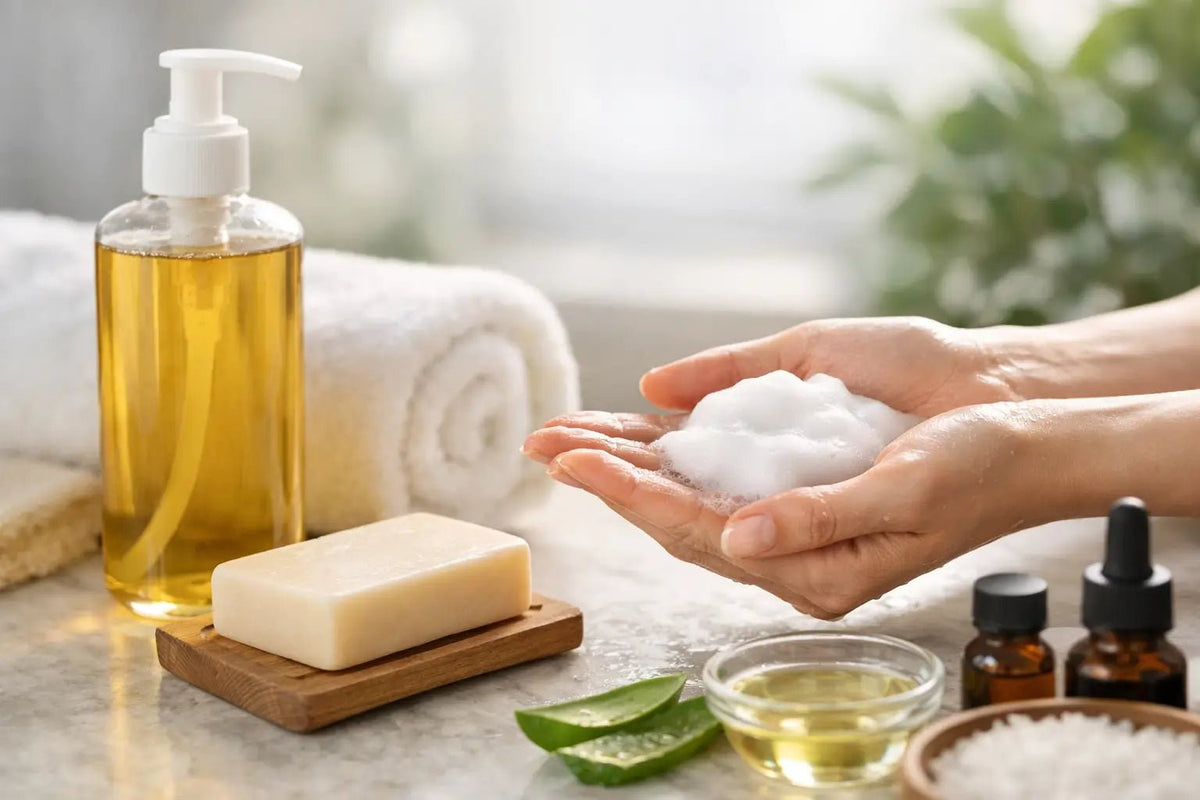
A bottle of castile soap can earn a permanent spot by the sink, in the shower, and in the cleaning caddy. The key to how to use castile soap is not using more of it. This concentrated, plant-oil-based soap goes a long way, and a little thoughtful dilution helps it feel like the simple everyday staple it is meant to be.
Castile soap is traditionally made from vegetable oils rather than animal fats. Modern versions may use olive, coconut, sunflower, or other plant oils, and they are often scented with essential oils or left unscented. Because formulas and concentrations vary, the label on your bottle should always be your first guide.
Castile soap is concentrated, so it is easy to overdo it. When too much soap is used, skin can feel tight, hair can feel coated, and household surfaces may need extra rinsing. Begin with the smallest amount that creates a light lather, then adjust only if you need to.
For a handwashing bottle or shower use, place a small amount in wet hands, add water, and work it into a gentle lather. Rinse well. If you are filling a foaming soap dispenser, use the dilution directions recommended by your particular soap and dispenser. Foaming pumps need plenty of water to work properly, while a regular pump bottle usually does best with undiluted soap or a label-approved mixture.
Keep diluted soap in a clean container, make only what you will use in a reasonable time, and do not top off an old mixture without washing the dispenser first. Clean tools and fresh water make a difference, especially in products used every day.
For most people, castile soap works best as a rinse-off cleanser. Use it for hands, body, and feet much as you would use any liquid soap: apply a small amount to wet skin, lather briefly, and rinse thoroughly with warm water.
If your hands are dry from frequent washing, keep the water comfortably warm rather than hot and follow with hand cream while skin is still slightly damp. Soap cleans away dirt and oils, which is useful, but every cleanser can be drying when used too often or without moisturizer. A nourishing cream helps restore that comfortable, cared-for feeling.
Those with very dry, sensitive, or eczema-prone skin may prefer a cream bar soap or a gentler body wash for regular bathing. Natural does not automatically mean suitable for every skin type. Fragrance and essential oils can also be a concern for sensitive skin, so an unscented option and a small patch test are sensible choices.
Castile soap should stay out of the eyes. It is soap, not a tear-free cleanser, and it can sting. If it gets into your eyes, rinse with plenty of clean water. For the same reason, it is usually not the best choice for washing an infant’s face or for intimate areas, where a product designed for that particular use may be more comfortable.
In the shower, a few drops on a wet washcloth, shower pouf, or your hands are generally enough for a full-body wash. More product will not make you cleaner, but it may leave skin feeling less comfortable after you towel off.
A washcloth is especially helpful when you want gentle exfoliation without a scrub. Work up a light lather, cleanse skin in circular motions, and rinse. After bathing, pat dry rather than rubbing vigorously, then apply body lotion or body oil to help hold onto moisture.
If you shave in the shower, castile soap can provide some slip when mixed with water, but it may not be enough for everyone. People prone to razor burn often do better with a dedicated shaving cream or a richer, more cushioning product. Let your skin make the call.
You can, but this is one area where results truly depend on your hair, water, and routine. Castile soap is an alkaline soap, while hair and scalp often feel their best with products formulated closer to their natural acidity. Some people like castile soap as an occasional clarifying wash. Others find it leaves hair rough, tangly, or dull, particularly in hard-water areas.
If you want to try it, dilute a small amount in your hands with water before applying it mainly to the scalp. Massage gently, rinse very well, and follow with a conditioner made for your hair type. Start once in a while rather than replacing your usual shampoo immediately.
Skip the experiment if your hair is color-treated, very dry, curly, or prone to tangling unless you are prepared to see how it responds. A good everyday shampoo and conditioner are often the easier choice for keeping hair soft and manageable. Castile soap is versatile, but it does not need to do every job in the bathroom.
Castile soap can be useful for routine cleaning when you need to lift everyday grime from washable, nonporous surfaces. A diluted solution on a cloth works well for wiping counters, sinks, tubs, and many sealed surfaces. Wipe again with a clean, damp cloth if you see any residue, then dry surfaces that benefit from a streak-free finish.
It is a cleaner, not a disinfectant. For surfaces that need sanitizing after raw meat preparation, illness, or other higher-risk messes, use a product that is specifically labeled for disinfecting and follow its contact-time instructions.
Avoid using castile soap on every material without checking first. Natural stone, unfinished wood, waxed surfaces, delicate fabrics, and specialty finishes can require their own care. Test a small hidden area when you are unsure, and do not use it in a dishwasher unless the manufacturer specifically says it is suitable. Soap suds can create a messy problem in machines designed for low-sudsing detergent.
One of the most useful castile soap rules is also one of the simplest: do not combine it with vinegar in the same bottle. Vinegar is acidic, while castile soap is alkaline. When mixed, they can react and leave behind a cloudy residue or a film that is less effective for cleaning.
That does not mean vinegar has no place in a cleaning routine. It simply means the two products are better used separately. Clean first with a soap solution, rinse if needed, and use another appropriate product only after the surface is clean and dry. Never mix cleaning products casually, especially when bleach or ammonia is involved.
The best way to use castile soap is to give it the jobs it handles well: everyday handwashing, a quick body cleanse, and straightforward household cleanup. Use a light hand, rinse thoroughly, and pair cleansing with moisture care when skin needs it.
For a family that wants fewer complicated products, that kind of flexibility is valuable. Beessential believes everyday care should feel practical and honest, whether you are washing garden soil from your hands, freshening the bathroom sink, or winding down with a warm shower. Let your skin and your home guide the routine, and keep the products that make both feel comfortably cared for.
Comments will be approved before showing up.