
Your Cart is Empty
Free lip balm + free shipping on orders over $39.99


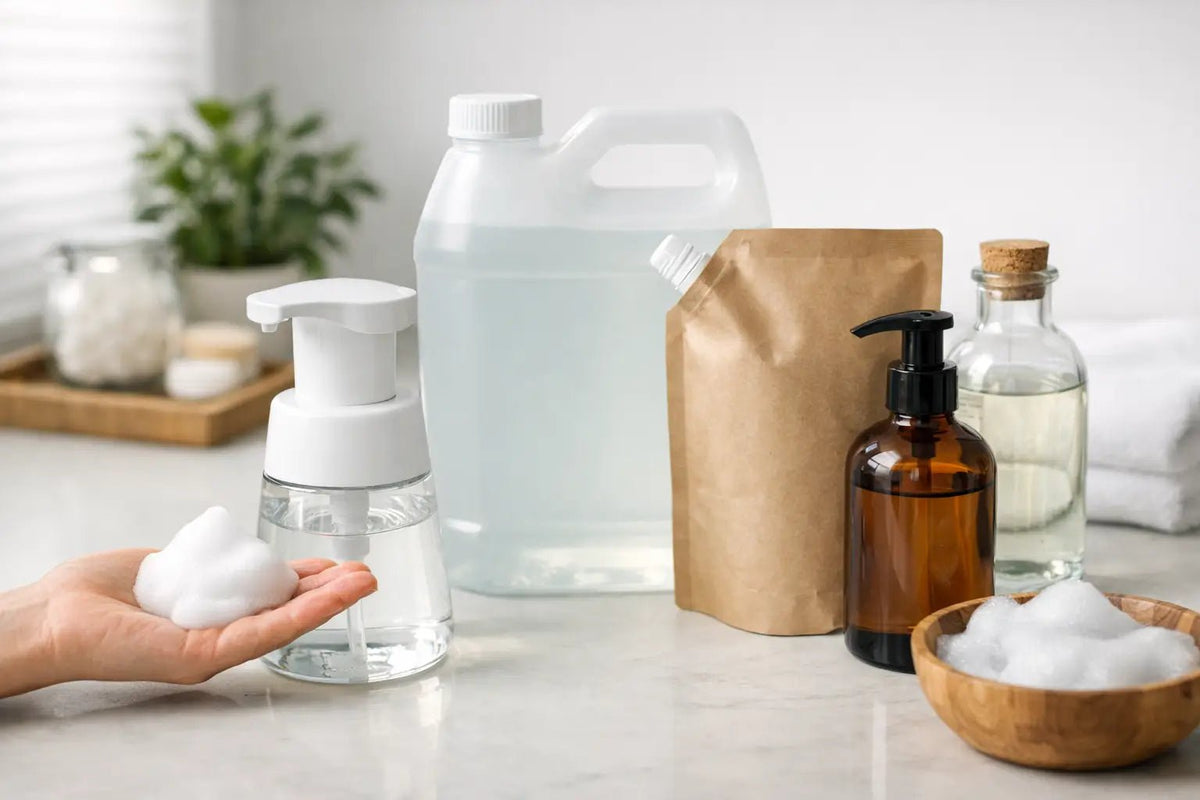
A foaming soap bottle can make the sink feel a little more put together, but it also creates a familiar question once the pump runs dry: what do you refill it with? The best foaming hand soap refill options keep the convenience of a light, satisfying lather without asking your household to buy another plastic pump bottle every few weeks.
For families who wash hands often, refills are a practical part of simple everyday care. They can reduce packaging, stretch your soap budget, and make it easier to keep a gentle cleanser at every sink. The right choice comes down to the bottle you have, the formula you prefer, and whether you want a ready-to-use refill or a concentrate you mix at home.
Foaming soap is not just liquid soap in a different bottle. The foaming pump blends liquid cleanser with air as it dispenses, creating the fluffy foam in your hand. For that mechanism to work well, the soap inside needs the right consistency.
A regular gel hand soap is usually too thick for a foaming pump. It may come out as a weak stream, clog the mechanism, or make the pump harder to press. On the other hand, a refill that is too thin can produce watery foam that disappears before you have had time to wash.
That is why a foaming hand soap refill made for a foaming bottle is often the simplest route. The formula is already balanced for the pump, so you can refill, replace the top, and get back to the sink without measuring or experimenting.
There is no single best refill format for every household. A busy kitchen sink, a small guest bathroom, and a low-waste household can all have different priorities. Knowing the trade-offs makes the choice easier.
Ready-to-use liquid refills are made to pour directly into a reusable foaming soap bottle. This is the most dependable option for people who want predictable performance and do not want to dilute anything at home.
They are especially helpful if you have found a scent and formula your family likes. A gentle botanical soap with familiar moisturizing ingredients can make frequent washing feel less drying, particularly during cold weather or when hands are already dealing with dishes, gardening, and everyday cleanup.
The trade-off is shipping weight. Because these refills contain water, larger bottles weigh more than concentrates. Still, buying a larger refill instead of several individual pump bottles can mean less packaging over time.
Concentrates use less water in the package, which can mean a smaller, lighter refill container. At home, you add water according to the product directions, then use the foaming pump to dispense the finished soap.
This option is useful if storage space and packaging reduction are your main concerns. It does require a little care. Use the recommended amount of concentrate, add water slowly to avoid excess bubbles, and do not assume every liquid soap can be diluted successfully. A concentrate is designed for that purpose. A ready-to-use soap is not.
If your water is very hard, it can sometimes affect how a diluted product looks or performs. Following the maker's instructions matters more than trying to make the mixture stronger or thinner by guesswork.
The container matters, too. Refill pouches often use less material than a rigid bottle, while larger refill bottles can be easy to pour, close, and recycle where accepted. Neither is automatically better in every situation.
A pouch may be the lower-material choice, but a sturdy bottle can be more convenient for households that refill several sinks at once. Consider what your local recycling program accepts and what you will realistically use. The most sustainable refill is one that helps you keep reusing the pump bottle you already own.
Some households mix castile soap and water in a foaming pump. It can be an economical option, but it is not always a reliable one. Different castile soaps have different strengths, scents, and viscosities, and a homemade mixture may foam differently from one bottle to the next.
It also has a shorter margin for error. Too much soap can strain the pump; too little can feel like washing with mostly water. If you enjoy a simple DIY routine and are comfortable cleaning the bottle often, it can work. If you want consistent foam and a formula made for frequent handwashing, a purpose-made refill is usually the easier choice.
A refill should feel easy, not messy. Before adding new soap, rinse the bottle and pump with warm water. Pump plain water through the mechanism a few times to clear leftover soap from the inner tube. This small step helps prevent clogs and keeps an older scent from mixing heavily with a new one.
Let the bottle and pump dry completely when possible, especially if you are switching formulas or have noticed buildup. Then pour in the refill slowly, leaving a little room at the top so the pump can be inserted without overflowing.
Once the top is on, pump a few times. A newly filled bottle may need several presses before soap reaches the nozzle. If the foam seems thin at first, give it a moment. If it continues to dispense poorly, check that the pump is fully tightened and that the product is intended for a foaming dispenser.
Avoid topping off a bottle over and over without washing it. Soap residue, water from wet hands, and product buildup can collect around the pump and inside the bottle. A quick clean between refills keeps the whole routine fresher.
The point of a refill is not only to use less packaging. It is also a chance to choose a soap your hands are happy to use many times a day. Look for a formula that cleans effectively without leaving your skin tight or stripped.
For many people, the best everyday option includes plant-derived cleansing ingredients alongside skin-comforting additions such as honey, aloe, olive oil, or glycerin. Honey is valued in simple personal care for its naturally comforting, moisture-loving qualities, while botanical ingredients can bring a clean feel and a pleasant scent without making handwashing feel like a chore.
Scent deserves a little thought, too. Bright citrus, fresh mint, and light floral notes can be lovely at a bathroom sink, while a softer or more neutral scent may make more sense in a kitchen where food aromas are already in the air. If someone in your home has very sensitive skin or fragrance concerns, choose accordingly and keep the ingredient list straightforward.
At Beessential, practical refillable everyday care is built around recognizable ingredients, including honey and thoughtfully selected botanicals. The goal is not a complicated ritual. It is a dependable soap that earns its place beside the faucet.
Reusing a foaming bottle is a good habit, but a pump will not last forever. If it sticks, leaks, fails to spring back, or stops producing foam after a thorough rinse, replacement may be the practical answer. A worn-out pump can waste more soap than it saves.
Keeping one or two bottles in regular rotation can help. Use a larger refill to maintain the kitchen and bathroom bottles, clean each bottle between fills, and replace the pump only when it has truly reached the end of its working life. That is a sensible balance between avoiding unnecessary waste and keeping handwashing easy for everyone.
A good refill routine should fit your real life: a bottle that works, a formula your hands enjoy, and a refill size you will use before it sits forgotten under the sink. Start there, and every wash becomes one small, useful way to care for your home, your hands, and the packaging you bring into both.
Comments will be approved before showing up.