
Your Cart is Empty
Free lip balm + free shipping on orders over $39.99


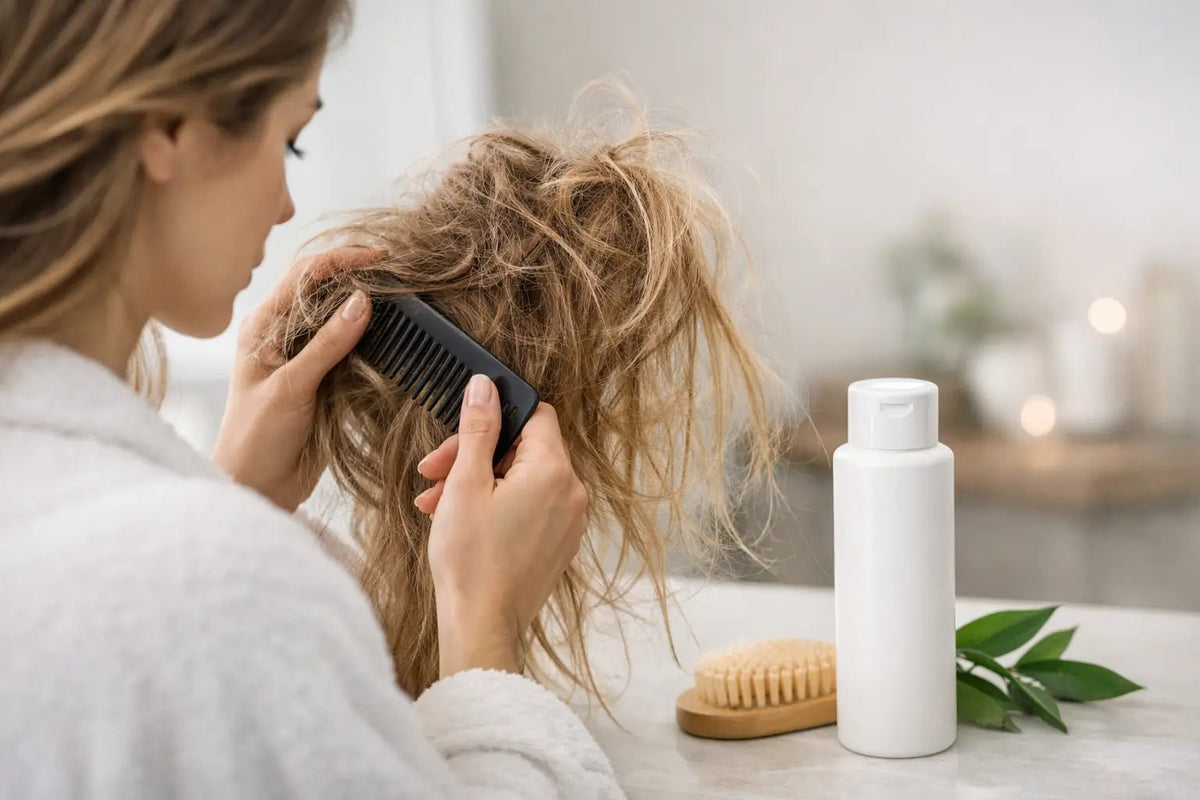
A stubborn knot at the nape of your neck can turn an ordinary shower into a frustrating tug-of-war. The right conditioner for tangled hair helps hair slip past itself more easily, so you can work through knots with patience instead of pulling, snapping, and starting over.
Tangles happen to nearly every hair type, from fine straight hair that knots in the wind to dry curls that catch where individual strands twist together. A good routine will not make hair immune to tangles, but it can make detangling gentler, faster, and far less damaging.
Hair tangles when the outer layer of each strand, called the cuticle, is lifted, rough, or dry enough to catch on neighboring strands. Friction does the rest. Sleeping on a cotton pillowcase, wearing a scarf, pulling on a sweater, windy walks, and a day with hair down can all create knots.
Dryness is often part of the picture. When hair has been washed with a cleanser that is too harsh for its needs, exposed to hot tools, colored, or simply left without enough moisture, its surface does not feel as smooth. Curly and textured hair can be especially prone to tangling because strands naturally wrap around one another.
Fine hair tangles for a different reason. It may feel soft and healthy but still knot quickly because its smaller strands are easily moved and crossed. In that case, a heavy conditioner can sometimes leave hair flat. The goal is not always the richest formula. It is the formula that gives your hair enough moisture and slip without leaving behind more weight than it needs.
Start with a conditioner made to soften and moisturize rather than simply coat hair with a temporary slick feeling. Familiar plant-derived ingredients such as aloe, coconut-derived conditioners, olive oil, and other nourishing botanical oils can help dry strands feel more flexible. Honey is another naturally moisture-loving ingredient that fits well into a simple hair-care routine, helping hair feel less parched and easier to manage.
A useful conditioner should spread easily through wet hair and give you enough slip to separate sections with your fingers. You should not need a large handful to get there. If you do, your hair may need a more moisturizing formula, or it may be time to look at the rest of your wash routine.
Consider your hair's needs along with its texture:
The way you apply conditioner matters almost as much as the bottle you choose. Start by rinsing shampoo out thoroughly. Leftover shampoo can make it harder for conditioner to do its job, especially near the roots and at the back of the neck.
Gently squeeze out excess water before applying conditioner. Hair should still be very wet, but not dripping so much that the product slides right off. Spread conditioner between your palms, then smooth it over the lengths and ends. If your roots tend to get oily, keep most of the product away from the scalp.
Let it sit for a minute or two. This small pause gives moisturizing ingredients time to soften the hair before you begin working through knots. For very dry or curly hair, it may help to divide hair into two to four loose sections first.
Use your fingers before reaching for a comb or brush. Begin at the ends, where small knots usually gather, and slowly work upward. When you meet resistance, hold the hair above the knot with one hand so you are not pulling directly on the scalp, then gently ease apart a few strands at a time. A wide-tooth comb can be helpful after finger detangling, especially for thicker hair.
Do not pile hair on top of your head and rub it around while washing or conditioning. That motion creates more crossing and twisting. Instead, keep hair flowing in the direction it grows, from scalp to ends. Rinse with lukewarm water, then press hair dry with a soft towel or T-shirt. Rough towel rubbing can bring back the very friction you just worked to reduce.
Sometimes tangles are a sign that hair needs support between wash days. If your ends feel dry again by the next morning, a small amount of leave-in conditioning care or a light detangling spray can help. Apply it to damp hair, focusing on the areas that knot most often, then comb through gently.
There is a trade-off here. Too much leave-in product can build up, making fine hair feel dull or causing curls to lose their bounce. Start with less than you think you need. You can always add another small amount to the ends.
A weekly deep-conditioning treatment can also make sense for hair that has been colored, frequently heat styled, or exposed to dry indoor air. It is not necessary for everyone. For hair that is naturally fine or gets oily quickly, a regular conditioner used well may be all that is needed.
It is also worth looking at your shampoo. If hair feels squeaky, stiff, or difficult to comb immediately after cleansing, the shampoo may be stripping away too much of the hair's natural softness. A gentle shampoo paired with a moisturizing conditioner is often more helpful than trying to fix dryness with increasingly heavy products afterward.
Detangling gets easier when you prevent the biggest knots before they start. Brush or finger-comb hair before showering, particularly if it has been up all day. After washing, avoid going to bed with soaking-wet hair. Wet strands are more delicate, and moving against a pillow all night can create a rough knot by morning.
Long hair may benefit from a loose braid for sleep, exercise, or a windy day. The key word is loose. Tight styles can create tension at the scalp and lead to breakage around the hairline. If you wear hats, scarves, or high collars often, take a moment to smooth the hair at your neck when you take them off.
Regular trims can help, too. Split ends catch more easily and can travel upward if they are left alone for too long. A trim will not change how fast your hair grows, but it can remove the worn ends that make every detangling session harder.
If knots seem to appear no matter what you do, resist the urge to attack them with a brush. More force rarely solves the problem. A dependable conditioner, enough time for it to soften the hair, and a slow ends-to-roots technique will protect more of the length you have worked to grow.
Simple everyday care has a way of adding up. Choose a conditioner that leaves your hair comfortable rather than coated, handle wet strands with a little extra kindness, and let your routine do the steady work of keeping tangles manageable.
Comments will be approved before showing up.