Your Cart is Empty
Free lip balm + free shipping on orders over $39.99




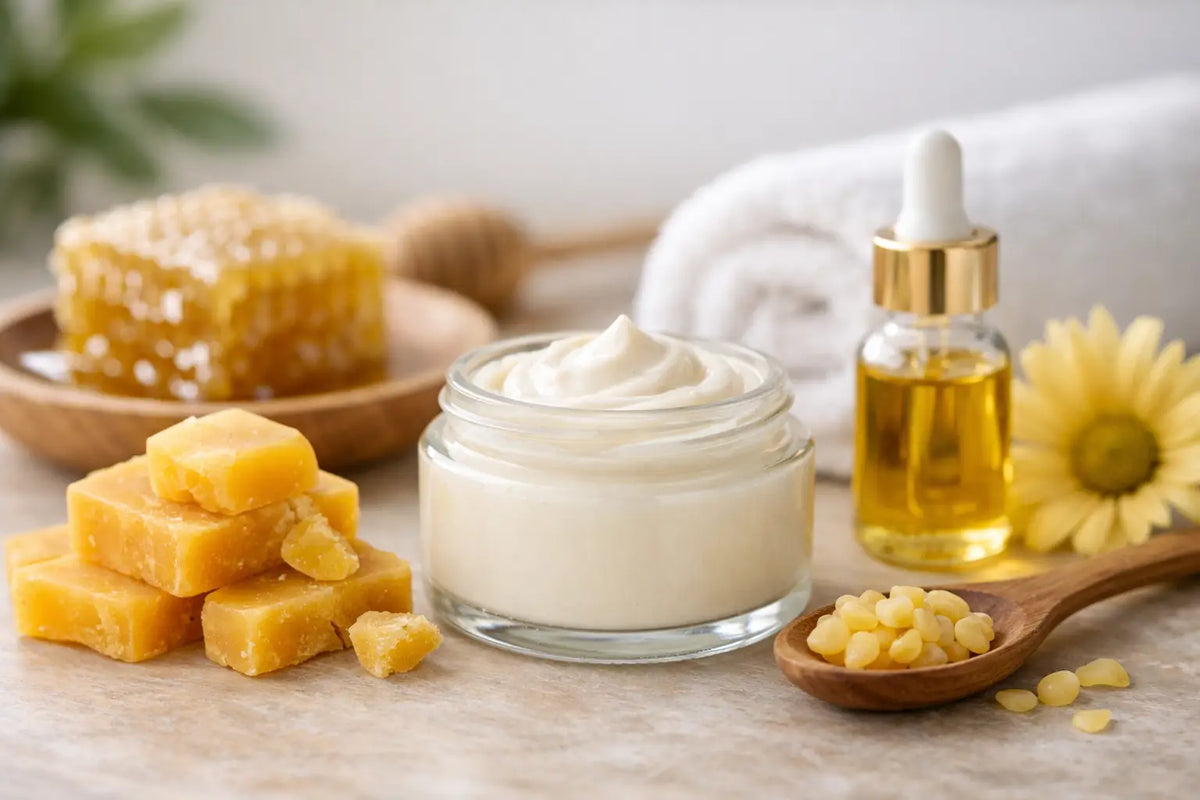
Dry hands after dishes, chapped lips in cold weather, and rough patches around the elbows all call for the same kind of care: something that helps hold moisture where skin needs it. So, is beeswax safe for skin? For most people, yes. Beeswax is a well-established ingredient in lip balms, salves, hand creams, and bar soaps because it creates a protective layer that helps soften and shield dry skin. Like any ingredient, though, it is not a perfect match for every person or every skin concern.
The most useful way to think about beeswax is not as a miracle cure, but as a hardworking part of a simple formula. It can help a moisturizer stay on the skin longer, give a balm its solid shape, and make everyday care feel more comforting when skin is exposed to wind, water, or dry indoor air.
Beeswax is a natural wax made by honey bees. In personal-care products, it is valued for its texture and its ability to form a light protective barrier on the surface of the skin. That barrier can slow moisture loss, which is especially helpful when skin already feels dry, tight, or weather-worn.
It is often paired with oils and butters for a reason. Oils such as olive, coconut, or sunflower oil help soften the skin, while beeswax gives the formula staying power. In a lip balm, for example, beeswax keeps the balm from melting too quickly in your pocket and helps it cling to lips instead of disappearing after one sip of coffee.
Beeswax is not a humectant, meaning it does not pull water into the skin the way glycerin or aloe can. It works best as a protective finishing ingredient. Apply it after washing, when skin is still slightly damp, or over a lightweight moisturizer to help seal in the comfort already there.
For many people with sensitive or dry skin, beeswax is gentle and useful. It is generally considered low risk for irritation when used in a well-made product. Still, “natural” does not automatically mean allergy-proof. A person can react to beeswax itself, to traces of other hive materials, or to another ingredient in the formula, such as fragrance, essential oils, botanical extracts, or preservatives.
People with a known allergy to bee products should be more careful. Beeswax may contain small amounts of propolis, a sticky resin bees collect from plants and use in the hive. Propolis is more likely than purified beeswax to cause allergic contact dermatitis in people who are sensitive to it. If you have reacted to propolis, honey, pollen, or bee-related products before, speak with a dermatologist or allergist before using a beeswax-rich balm or cream.
Signs of a reaction can include itching, burning, redness, swelling, hives, or a new rash where the product was applied. Stop using the product if these symptoms appear. Seek prompt medical care for trouble breathing, widespread hives, facial swelling, or other signs of a serious allergic reaction.
A patch test is a practical first step when trying any new skincare product, especially if your skin is reactive. Put a small amount on the inner arm or behind the ear, then leave it on as directed. Watch the area for 24 to 48 hours. If the skin stays comfortable, the product is more likely to be a good fit.
This is not a guarantee that your face or lips will react exactly the same way, but it can help you avoid putting a new product all over at once. It is also a good reminder to check the full ingredient label. Often, the ingredient causing trouble is not the beeswax.
Beeswax has a reputation for being heavy, but it is not automatically pore-clogging. Whether a beeswax product feels right on acne-prone skin depends on the whole formula, how much you use, and where you use it.
A firm beeswax balm may be wonderful on cuticles, heels, and lips, yet feel too rich across an oily forehead or on an area prone to breakouts. Some facial creams use a smaller amount of beeswax to give the product body without leaving a thick finish. Others combine it with richer oils that may not suit every complexion.
If you are prone to clogged pores, start small. Try a new product on one area of the face for several days, rather than changing your entire routine at once. For dry spots around the nose or mouth, a little beeswax-based balm can be useful. For active acne, a product made specifically for your skin type may be the better daily choice.
Beeswax shines in products intended for exposed, frequently washed, or easily chapped areas. Hands are a classic example. Repeated handwashing can leave skin feeling stripped, and a beeswax hand cream can help protect the skin after moisturizer has been applied.
Lips are another natural fit. They have a thin outer barrier and face constant exposure to weather, food, and saliva. A beeswax lip balm adds a protective layer that can make dry lips feel less vulnerable to the next blast of cold air.
It can also be useful on cuticles, rough heels, elbows, and other small dry patches. A small amount goes a long way. If a product leaves skin feeling coated or uncomfortable, use less or save it for nighttime care, when a richer texture may feel more welcome.
When you see beeswax on an ingredient list, it helps to look beyond that one familiar name. A simple beeswax balm with plant oils may be a good choice for lips and dry hands. A scented product may be perfectly pleasant for many users but less ideal for someone who knows fragrance triggers their eczema or sensitivity.
For eczema-prone skin, keep routines uncomplicated. Choose products with fewer potential irritants, patch test first, and follow the guidance of your healthcare professional for persistent flares. Beeswax can support the feel of a protective moisturizer, but it is not a replacement for prescribed treatment or medical advice.
The same approach applies to children. Many families use plain beeswax-based balms for dry cheeks or chapped hands, but a short ingredient list and a careful patch test are wise. Avoid applying products to broken, infected, or severely inflamed skin without checking with a pediatrician or dermatologist.
Beeswax is appealing because it is recognizable, functional, and has been used in personal care for generations. Responsible use also means respecting the work behind it. Honey bees make wax for the structure of their hive, and beekeepers harvest it carefully as part of hive management.
At Beessential, beeswax is part of a family beekeeping story, but its place in everyday products is wonderfully practical: it helps make a lip balm protective, a cream comforting, and simple care easier to keep close at hand. The best product is still the one your skin tolerates well and that you will use consistently.
If your skin is dry but not reactive, beeswax can be a dependable addition to your routine. Start with a small amount on the areas that need it most, pay attention to how your skin responds, and let comfort be the measure that matters.
Comments will be approved before showing up.